⚡ Digital Lightning Solutions
Lightning protection software solutions
Monitor. Protect. Certify.
Every lightning strike is actionable data. We collect it, design protection systems in compliance with standards, and certify every step. A single ecosystem covers the entire chain — from monitoring to defensible records.
Global detection network, tiered alerts, customizable perimeters and updates every 60 seconds (IEC 62793). Strike history, keraunic density and multi-year trends to assess each site’s actual exposure.
Design and sizing in compliance with NF C 17-102 and IEC 62305. Decision support during storms — evacuation, work suspension and event safety. Long-term installation tracking: asset management, periodic inspections and maintenance history.
Keraunic reports, strike certificates (IEC 62858, IEC 62305-2:2024) and a defensible intervention report after every alert. Supporting evidence for DUERP, OSHA and IEC 62793 requirements — ready to present to insurers, courts and the families of people exposed to lightning risk.
Complementary tools covering the entire cycle.
Design, equip, verify, monitor, alert: each solution addresses a specific step.







| Your need | Solution |
|---|---|
| Equip a building with air terminals, earthing and accessories | LPS France |
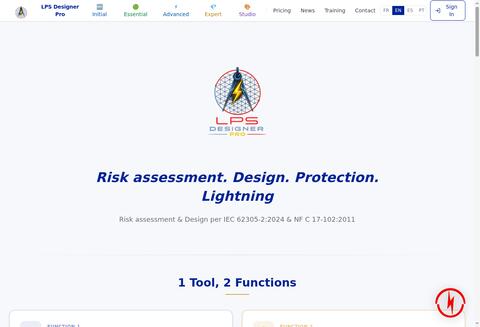
| Design and size a lightning protection installation | LPS Designer Pro |
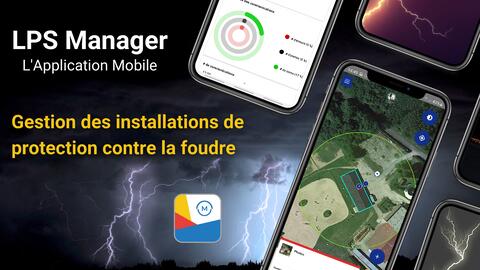
| Describe and inspect an installation on site | LPS Manager |
| Manage an entire fleet of installations | LPS Fleet |
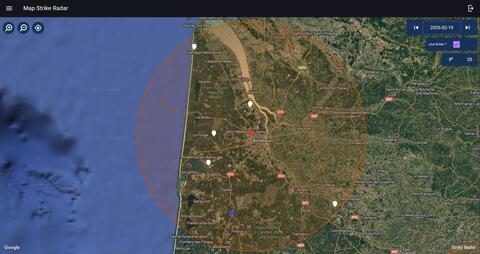
| Know a site's lightning history, obtain a strike certificate or a keraunic report | Strike Radar |
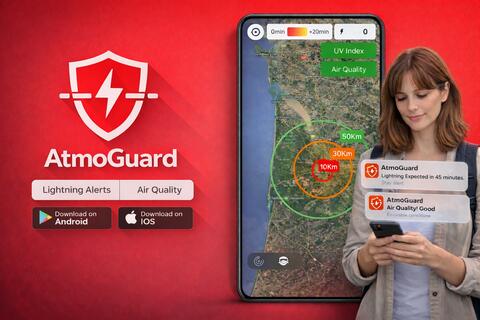
| Get a personal alert when a storm approaches | AtmoGuard |
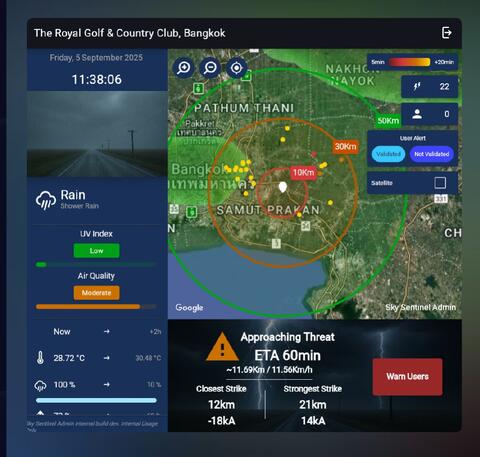
| Monitor your sites and alert exposed people | Sky Sentinel |
Select a need to see the recommended products.
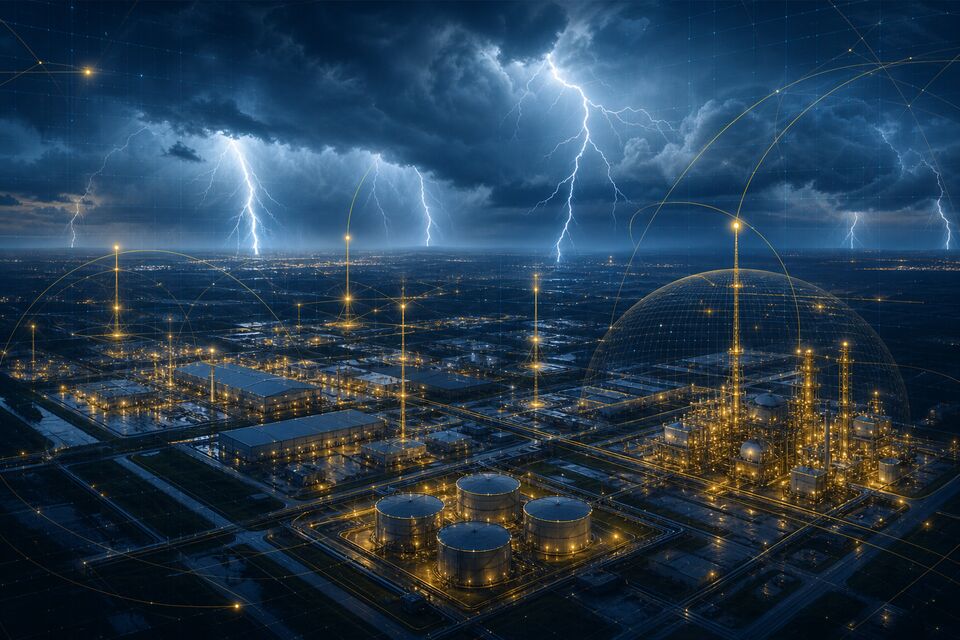
Every year, 1.4 billion lightning strikes hit the planet. For years, people could only react after the fact, once the damage had been done. LPS Platform transforms raw data into actionable insight — to anticipate, protect and provide evidence.
For professionals, it means being able to trigger an evacuation plan before a storm, document every event for the occupational risk assessment (DUERP), or design lightning protection using real measured data rather than theoretical estimates.
For individuals, it means knowing in time when a storm is approaching — and acting accordingly. For institutions, it means documented proof that duty-of-care obligations have been met.
Drawing on more than 25 years of experience in lightning protection (since 2000), LPS Platform brings together 6 complementary solutions: from design to certification, through fleet management, continuous monitoring and regulatory compliance.
Our conviction: lightning data is not reserved for specialists. It concerns everyone who works, lives or makes decisions in an exposed environment — and that means everyone.
LPS Platform brings together lightning protection software solutions: design (LPS Designer Pro), on-site installation tracking (LPS Manager), management of a fleet of installations (LPS Fleet), lightning data and reports (Strike Radar), continuous monitoring and site alerts (Sky Sentinel) and personal alerts (AtmoGuard), alongside the LPS France air terminal catalogue.
Sky Sentinel acts before and during the storm: continuous monitoring of your sites within a 50 km radius, updated every 60 seconds, graded alerts to bring people to safety and an enforceable intervention report. Strike Radar documents strikes: lightning density, strike certificates and keraunic reports compliant with IEC 62858 and IEC 62305-2, with real-time lightning alerts included in the subscription.
They are complementary. LPS Fleet centralizes the overview of your fleet of installations: map of projects by file status, indicators, weather and lightning per project, suggested tasks and calendar. LPS Manager handles technical details and on-site operations: description of each installation, inspections and reports.
IEC 62793 covers lightning warning systems (Sky Sentinel). IEC 62858 covers lightning density data from detection networks (Strike Radar). The IEC 62305 series covers lightning protection; IEC 62305-2 defines the risk assessment used by LPS Designer Pro.
LPS Platform solutions are available in more than 190 countries. Lightning data come from the GLD360+ sensor network, with worldwide coverage. The website is available in French, English, Spanish and Portuguese.
Sky Sentinel and LPS Manager offer a free trial. AtmoGuard is free on the App Store and Google Play. LPS Designer Pro can be started for free. For Strike Radar, LPS Fleet or a demo, write to us at contact@lpsplatform.com.
An Early Streamer Emission (ESE) air terminal generates an anticipated upward leader, providing an extended protection radius compared to a simple Franklin rod. A simple Franklin rod provides protection within a limited cone by means of its pointed tip. ESE is governed by NF C 17-102:2011, Franklin by IEC 62305. LPS France manufactures the Ellips and communicating Paraton@ir ranges, in compliance with NF C 17-102 and IEC 62305.
Yes, in many cases. In France, the Labour Code (L4121-1 / L4121-2) requires employers to assess and prevent lightning risk in the occupational risk assessment (DUERP). ICPE regulations mandate lightning risk analysis for classified facilities. In the US, OSHA §5(a)(1) requires a safe working environment. In Europe, Directive 89/391/EEC governs employer obligations.
Nsg (Ground lightning severity level) is a measured value required by IEC 62305-2:2024 for lightning risk calculation. Strike Radar provides real Nsg data from the GLD360+ network, replacing theoretical estimates. The Strike Radar probe is a 100% virtual monitoring point defined by a GPS position, 100 km radius, with no sensor to install.
A Sky Sentinel probe is a 100% virtual monitoring point defined by a GPS position, with no sensor or hardware to install. It covers a 50 km radius and relies on the global GLD360+ network to detect lightning activity. Data is updated every 60 seconds with graduated alerts in compliance with IEC 62793.
It is a certified Sky Sentinel-branded document generated after each lightning alert. It shows that safety measures were applied in compliance with IEC 62793 and employer obligations (L4121-1 France / OSHA USA / Directive 89/391/EEC). The report can be presented to insurers or in court, and shared with people close to those exposed to the risk.
If less than 30 seconds separate the lightning flash from thunder, the storm is within 10 km: seek shelter immediately. Wait 30 minutes after the last thunder before resuming outdoor activities.
A question or a need? Write to us and we will get back to you shortly.